
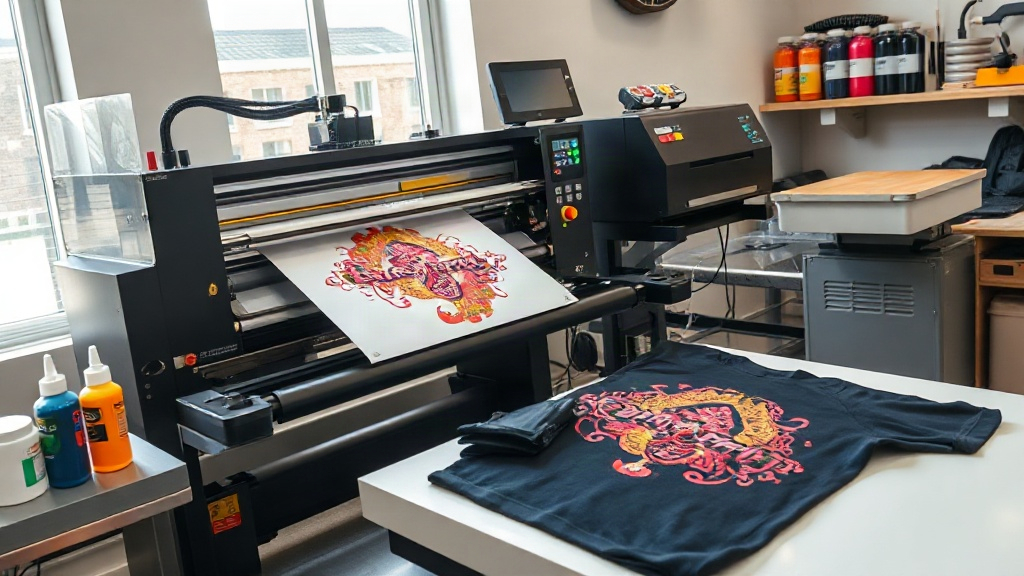
When you want custom apparel that pops with color and stands up to wear, DTF printing has become a game-changer. Unlike traditional methods that limit your fabric choices or require minimum orders, DTF (Direct to Film) printing lets you transfer detailed designs onto almost any fabric with stunning vibrancy. Whether you're a small business owner, a hobbyist, or a team manager, understanding DTF printing can unlock a world of creative possibilities. In this guide, we'll walk you through the entire process, from design to finished product, and share expert tips to get professional results every time.
What Exactly Is DTF Printing?
DTF printing is a digital printing technique where your design is printed onto a special film, coated with a heat-activated adhesive powder, and then transferred onto fabric using a heat press. This method bridges the gap between screen printing and direct-to-garment (DTG) printing, offering the best of both worlds: the ability to print full-color, intricate designs without the setup costs of screens, and the durability and stretchability that DTG sometimes lacks.
The magic of DTF lies in its versatility. You can print on cotton, polyester, blends, and even nylon or leather. The transfer is thin and flexible, so it moves with the fabric without cracking or peeling. Plus, because the design is printed on a film first, you can store transfers for months and press them on demand, making it ideal for on-demand production or small batches.
A Brief History and Evolution
DTF printing emerged in the early 2010s as a solution for printing white ink on dark garments without the complexity of DTG. It quickly evolved into a full-color process that rivals screen printing in vibrancy and detail. Today, advancements in film, inks, and powders have made DTF a mainstream choice for custom apparel decorators worldwide.
How the DTF Process Works Step by Step
Understanding the workflow helps you troubleshoot issues and achieve consistent results. Here's a breakdown of the DTF printing process:
- Design Preparation: Create your artwork in a graphic design program. Ensure it's mirrored (flipped horizontally) because the film will be pressed face-down onto the fabric. Use CMYK color mode and high resolution (300 DPI) for crisp details.
- Printing: Load the DTF film into a specialized printer equipped with pigment inks. The printer lays down a layer of white ink first (if printing on dark fabric), followed by the color layers. Some printers also print a white base for vibrant colors on light garments.
- Powder Application: While the ink is still wet, the printed film passes through a powder shaker that evenly coats it with a thermoplastic adhesive powder. Excess powder is removed, and the film goes through a curing oven to melt the powder into a gel-like layer.
- Curing: The film is heated to around 160°C (320°F) for a few minutes to activate the adhesive. This step is critical for wash durability.
- Transfer: Place the cured film on your garment with the design facing up (or down, depending on the film type), and press with a heat press at 150-160°C (300-320°F) for 10-15 seconds with medium pressure. Peel the film while hot or cold, depending on the film's instructions.
Each step requires attention to detail. For instance, insufficient powder can cause the design to peel, while too much powder can create a stiff feel. Similarly, incorrect pressing temperature can lead to poor adhesion or scorched fabric.
Why Choose DTF for Your Custom Apparel?
With so many printing methods available, DTF stands out for several compelling reasons:
- Unmatched Versatility: Print on virtually any fabric, including cotton, polyester, blends, and even treated nylon. No need for pre-treatment, unlike DTG.
- Vibrant Colors: DTF inks produce bright, opaque colors, especially on dark garments, without the limitations of screen printing.
- Durability: When applied correctly, DTF transfers withstand 50+ washes without fading, cracking, or peeling. They stretch with the fabric, making them great for activewear.
- Cost-Effective for Short Runs: No setup fees or minimum orders. Print one or one hundred transfers at the same per-unit cost.
- Fine Detail Reproduction: From gradients to tiny text, DTF captures intricate details that screen printing might miss.
- Storage and On-Demand: You can print transfers in bulk and store them for months, pressing as needed. This is perfect for fulfilling orders quickly.
Of course, DTF isn't perfect for every scenario. For very large orders of simple designs, screen printing may be more economical. And for 100% cotton white shirts, DTG can offer a softer hand. But for most custom apparel needs, DTF delivers an excellent balance of quality, flexibility, and cost.
Essential Equipment and Materials for DTF Printing
To get started with DTF printing, you'll need the right setup. Here's what you'll need:
1. DTF Printer
You can convert an existing inkjet printer (like an Epson) with a DTF conversion kit, or buy a dedicated DTF printer. Dedicated printers offer better reliability and are designed for the ink and film. Look for models with white ink circulation systems to prevent clogging.
2. DTF Inks
Use pigment-based DTF inks, typically in CMYK plus white. Quality inks ensure vibrant colors and durability. Avoid using regular inkjet inks, as they won't adhere properly.
3. DTF Film
This special film has a coating that releases the ink when heated. It comes in sheets or rolls. Choose a film thickness that matches your printer and desired feel. Thinner films (75-100 microns) give a softer hand.
4. Adhesive Powder
Thermoplastic polyurethane (TPU) powder is the standard. It melts and bonds the design to the fabric. Fine powder (80-200 microns) works best for detailed designs.
5. Heat Press
A heat press with accurate temperature and pressure control is essential. You can use a clamshell or swing-away press. For DTF, you'll also need a way to cure the powder, which can be done with a heat gun, oven, or dedicated powder curing oven.
6. Optional: Powder Shaker and Oven
For efficient production, a powder shaker machine automates powder application and curing. This is a worthwhile investment if you plan to produce transfers regularly.
Tips for Flawless DTF Transfers
Even with the right equipment, small mistakes can ruin your results. Follow these tips to ensure success:
- Mirror Your Design: Always flip your artwork horizontally before printing. The film is pressed face-down, so the mirrored image becomes correct on the garment.
- Control Moisture: Humidity affects powder adhesion. Store film and powder in a dry environment. If powder clumps, it's too humid.
- Pre-Press Garments: Remove wrinkles and moisture from the fabric before pressing. A quick 5-second press helps.
- Use the Right Pressure: Medium pressure is usually best. Too little pressure causes poor adhesion; too much can spread the design.
- Peel at the Right Temperature: Some films require hot peel, others cold. Check your film's instructions. Hot peel is quicker but can distort fine details if not careful.
- Test Wash: Before selling, wash a sample garment to ensure durability. If it fails, adjust your powder or pressing parameters.
These tips come from countless hours of trial and error in our own shop. We've found that consistency in temperature and powder application is the key to repeatable results.
Common DTF Problems and How to Fix Them
Even experienced printers encounter issues. Here's a troubleshooting guide:
Design Peels After Washing
Likely causes: insufficient powder, under-curing, or too low pressing temperature. Increase powder coverage, ensure the powder is fully melted (cure at 160°C for 2-3 minutes), and press at 160°C for 15 seconds.
Colors Look Dull
On dark garments, you need a white ink base. Ensure your printer lays down enough white ink. Also, use high-quality DTF inks and proper color profiles.
Film Won't Peel Cleanly
This often happens if the transfer is too hot or too cold. Try adjusting peel temperature. Also, ensure the film is compatible with your ink and powder.
Stiff or Rubbery Feel
Too much powder or excessive ink laydown can cause this. Use finer powder and reduce ink density. Thinner films also help.
For more detailed troubleshooting, refer to your printer's manual or community forums, but these fixes solve most common problems.
DTF vs. Other Printing Methods: A Quick Comparison
How does DTF stack up against screen printing, DTG, and vinyl?
- Screen Printing: Best for large runs of simple designs. DTF wins for complex, multi-color designs and small batches.
- DTG: Great for 100% cotton, but requires pre-treatment and can be less durable. DTF works on more fabrics and often lasts longer.
- Vinyl (HTV): Good for simple shapes and text, but limited in color gradients and fine detail. DTF excels at photographic images and intricate patterns.
Ultimately, DTF offers the most versatility for a one-person shop or a growing business.
Frequently Asked Questions About DTF Printing
Can I use DTF printing on 100% polyester?
Yes, DTF printing works well on polyester. However, polyester requires lower pressing temperatures to avoid dye migration. Use a low-temperature DTF film and press at around 130-140°C (265-285°F). Also, pre-test to ensure the polyester dye doesn't bleed through the transfer.
How long do DTF transfers last?
When properly applied, DTF transfers can last as long as the garment itself, often 50+ washes. Durability depends on powder quality, curing, and washing conditions. Wash inside out in cold water and avoid bleach to maximize lifespan.
Do I need a special printer for DTF?
You can convert a standard inkjet printer with a DTF conversion kit, but dedicated DTF printers are more reliable. They have white ink circulation and are built to handle the thicker inks. If you're serious about DTF, invest in a dedicated printer.
What fabrics can I print on with DTF?
DTF adheres to cotton, polyester, blends, nylon, leather, and even some treated woods. It's not ideal for fabrics with heavy coatings or waterproof finishes, as the adhesive may not bond. Always test a small area first.
Is DTF printing cost-effective for small businesses?
Absolutely. With no minimum orders and low setup costs, DTF is perfect for small businesses, especially for custom orders. The per-unit cost is consistent whether you print one or one hundred, making it easy to scale.
Getting Started with DTF Printing
If you're ready to dive into DTF printing, start by researching equipment that fits your budget and production needs. Join online communities for support and stay updated on new films and powders. Practice with different fabrics and designs to master the process. With patience and the right tools, you'll be creating stunning custom apparel that your customers will love.
Remember, DTF printing is as much an art as a science. Don't get discouraged by initial failures. Every mistake teaches you something new. Soon, you'll be producing vibrant, durable transfers that set your business apart.