
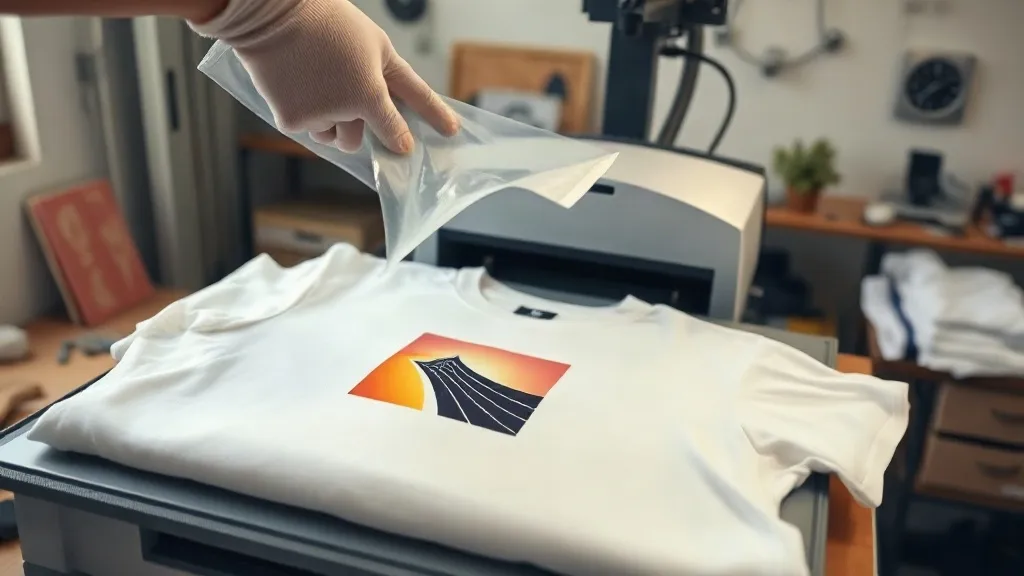
Most failed dtf transfers do not fail because the film was bad or the artwork was wrong. They fail at the press. A transfer that looked flawless coming off the platen can start lifting at the corners after two washes, and the culprit is usually one of three numbers: temperature, pressure or time. Get those three right for the fabric in front of you and the same transfer suddenly behaves like a factory print. Get them wrong and even premium film will let you down.
This guide is built around what actually happens on a real press, not a spec sheet. You will find starting settings for the most common garment types, the reasoning behind each number, and the small habits that separate a shop with a 2 percent failure rate from one that reprints constantly.
Why DTF Is More Forgiving Than Vinyl, But Not Foolproof
Direct-to-film printing works differently from heat transfer vinyl. The design is printed onto a PET film with a powdered hot-melt adhesive backing, and that adhesive is what bonds to the fabric. Because the adhesive is thermoplastic, it softens with heat and re-hardens as it cools. That is the whole mechanism, and it explains why temperature matters so much: too cool and the adhesive never fully flows into the fibers, too hot and it can over-cure or scorch the garment.
This is also why dtf handles cotton, polyester, blends, canvas and even some nylon far better than vinyl ever could. The adhesive grips mechanically around individual fibers rather than relying on a chemical match with the fabric. But that mechanical grip only forms under the right combination of heat, pressure and dwell time.
Baseline Heat Press Settings for DTF
Treat these as a starting point, then adjust for your specific press and film. Every press runs a little different, and a cheaper clamshell will lose more heat during the press cycle than a well-built swing-away.
- Temperature: 300 to 320 degrees Fahrenheit (150 to 160 degrees Celsius)
- Pressure: Medium to medium-firm, roughly 40 to 60 PSI, or a setting where you feel solid resistance but can still close the press comfortably
- Dwell time: 10 to 15 seconds for the main press, plus a short second press after peeling
- Peel: Warm peel, usually 3 to 5 seconds after the platen lifts
If you are new to the process and want a broader walkthrough of the workflow itself, the fundamentals of dtf transfers are worth reading before you start tweaking numbers, because understanding the adhesive layer makes the settings make sense.
Matching Settings to the Fabric
Blanket settings get you close, but fabric type is where the real adjustments happen. Below is how to shift the baseline for the materials you will actually press.
100 Percent Cotton
Cotton is the easiest surface for dtf. It absorbs heat steadily and the adhesive bonds deeply into the fibers. Run 310 degrees Fahrenheit for 12 to 15 seconds at medium-firm pressure. Cotton also tolerates a slightly hotter press, so if you are fighting corner lift on heavy cotton, nudging up to 320 degrees for 12 seconds often solves it without any other change.
Polyester and Performance Blends
Polyester is where most people get into trouble. It is heat sensitive, and pushing past 300 degrees can cause dye migration, where the garment's own dye sublimates into the transfer and tints the design. Drop to 290 to 300 degrees, keep the dwell at 10 to 12 seconds, and use a lower pressure setting. If you regularly print on red, navy or black polyester, a poly-blocker underlay is a cheap insurance policy.
Cotton Poly Blends
Blends sit in the middle. A 50/50 shirt presses comfortably at 300 to 310 degrees for 12 seconds. The key with blends is consistency: because the fiber mix can vary between manufacturers, run a test press on a scrap from the same batch before you commit to a full order.
Canvas, Totes and Heavy Goods
Thick canvas and heavy totes soak up heat, so the surface temperature at the adhesive is lower than what your press display reads. Pre-press the blank for 5 seconds to drive out moisture, then press the transfer at 315 degrees for 15 seconds with firm pressure. A second press of 5 seconds after peeling helps on textured canvas.
Pressure: The Setting Everyone Ignores
Temperature gets all the attention, but pressure is where inconsistent results usually come from. Too little pressure and the adhesive never reaches the fiber base, so the transfer sits on top and peels. Too much pressure and the adhesive gets pushed outward, causing the dreaded halo of excess film around the design and a stiff, plastic hand feel.
A practical way to check: press a test transfer, peel it warm, then look at the edge. If you see a visible ring of adhesive beyond the design, back off the pressure. If the corners lift easily while the center is stuck, add pressure. On a pneumatic press, this is a dial adjustment. On a manual clamshell, it is the knob at the back, and a quarter turn makes a surprising difference.
The Second Press Nobody Talks About
After the warm peel, run the garment back under the press for 3 to 5 seconds with a cover sheet or parchment over the design. This does two things. First, it pushes the transfer fully into any texture the fabric has. Second, it re-melts the adhesive surface so it settles evenly, which improves wash durability noticeably. It costs five seconds and it is the single easiest upgrade to your process.
Wash Durability: What Actually Matters
A properly pressed DTF transfer should survive 50 or more home washes without cracking or lifting. If yours is failing at ten, the press settings are usually the cause, not the film. Beyond temperature and pressure, three habits make a real difference:
- Pre-press the garment for 5 seconds before applying the transfer to remove moisture and wrinkles.
- Let the finished garment cool completely flat before folding or stacking it.
- Wash inside out in cold water and skip the high heat dryer cycle for the first few washes.
Moisture is the quiet killer here. A shirt that has been sitting in a humid storeroom will trap steam under the transfer during pressing, and that steam creates the tiny bubbles that later turn into cracks.
Finding Reliable Film and Local Suppliers
Settings only take you so far if the film itself is inconsistent. Adhesive thickness varies between manufacturers, and a film that runs perfectly at 310 degrees may need 320 from a different supplier. When you are comparing options, whether you are ordering online or searching for dtf transfers near me to shorten turnaround, ask about the adhesive spec and request a sample before committing to volume. A single test press on your own equipment tells you more than any product page.
Quick Troubleshooting Reference
- Corners lifting after wash: increase pressure or add 5 degrees of heat.
- Design feels stiff and plastic: reduce pressure, the adhesive is spreading too far.
- Colors look dull or tinted: temperature too high for the fabric, likely dye migration on polyester.
- Cracks along the design after washing: moisture trapped under the transfer, pre-press longer.
- Transfer will not release from film: film is too cool, peel within 5 seconds of opening the press.
Frequently Asked Questions
What temperature should I use for DTF transfers on a 100 percent polyester shirt?
Stay between 290 and 300 degrees Fahrenheit with a 10 to 12 second dwell and lighter pressure. Polyester is heat sensitive, and going above 300 degrees raises the risk of dye migration, especially on dark colors.
Do DTF transfers need a special press or will a home heat press work?
A standard home heat press works fine as long as it holds temperature reasonably well and lets you adjust pressure. The main limitation of budget presses is heat recovery during the press cycle, so pre-heating the platen and pressing consistently sized batches helps.
Why does my DTF transfer peel off after the first wash?
The most common causes are insufficient pressure, a dwell time under 10 seconds, or pressing onto a damp garment. Check that the adhesive has fully bonded by looking for a slight texture imprint of the fabric in the transfer after peeling.
Can I press DTF transfers onto nylon or waterproof jackets?
It is possible but risky. Nylon and coated fabrics can melt or discolor under DTF heat, and the adhesive does not always bond well to water-repellent finishes. Always test on a hidden area first and consider a lower temperature with a longer dwell.
How long should I wait before washing a freshly pressed DTF shirt?
Wait at least 24 hours. The adhesive continues to settle and cure as it cools, and washing too soon can weaken the bond before it has fully set.