
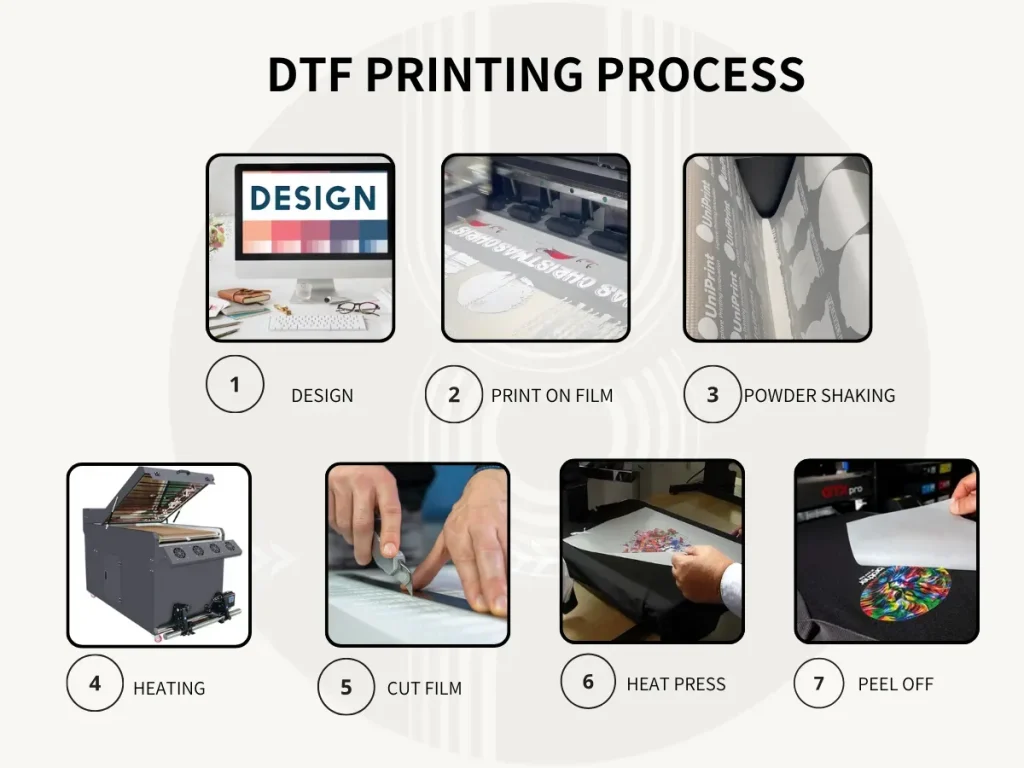
DTF printing has transformed the apparel industry by delivering vivid color, fabric versatility, and rapid turnaround. As direct-to-film printing gains momentum, designers enjoy high detail and on-demand flexibility across multiple product lines. This technology has evolved from early transfer concepts into a mainstream option for small-batch runs and on-demand production. The approach minimizes pretreatment on many fabrics and supports a wide range of materials with consistent results. These factors make it a scalable choice for emerging brands and customization-focused retailers seeking rapid deployment for ongoing campaigns worldwide.
Looking at the evolution of this technology, many refer to the journey as film-to-fabric transfer innovations, a film-based method that brings designs to life on textiles. Some observers frame the development as DTF printing history, highlighting how digital inks, PET films, and powders combine for durable results. In practice, the workflow resembles a transfer process: printing onto a PET film, applying adhesive, curing, and pressing onto the garment. This approach is often contrasted with screen printing and DTG, emphasizing flexibility, lower minimums, and broader fabric compatibility. As brands pursue on-demand, personalized merchandise, the film-based transfer method offers an attractive path to scale and speed. With ongoing tech advances, educators and shop owners alike can leverage clear color management and streamlined workflows.
DTF printing History: Evolution, Milestones, and Industry Impact
DTF printing history traces the shift from traditional transfer methods to digital ink-based solutions. It began with film-based transfer concepts and evolved into a robust process that relies on CMYK inks, white ink for opacity, a PET film, and an adhesive powder. This history highlights a move toward flexibility, lower setup costs, and rapid on-demand capabilities that reshaped inventory planning and lead times for brands, designers, and manufacturers alike.
As brands sought faster routes from concept to garment, the DTF printing history intersected with the rise of e-commerce, on-demand fulfillment, and scalable small-batch production. When compared with screen printing and DTG, the historical narrative shows DTF blending the best aspects of each method—vibrant color, broad fabric compatibility, and simpler workflows that reduce setup friction, enabling more brands to experiment with limited editions and faster drops.
Direct-to-Film Printing Explained: How It Works from Film to Fabric
Direct-to-film printing refers to the workflow where an image is printed onto a PET film using CMYK inks, often with white ink for opacity, then coated with an adhesive powder and cured before being transferred to fabric via heat press. This process creates a durable, high-fidelity image that can be applied to a wide range of materials.
This approach separates ink placement from the garment during initial steps, enabling more predictable color management and broad fabric compatibility—from 100% cotton to blends and performance textiles. By printing on film first and then transferring, operators gain flexibility, quicker changeovers, and the potential for faster turnaround times without heavy pretreatment on many fabrics.
DTF Printing Process: Steps, Materials, and Key Variables
The DTF printing process starts with design preparation in a vector or high-resolution raster format, followed by printing onto a special PET film using ink formulated for transfer. The printer typically uses a CMYK color set, sometimes supplemented with white ink to improve opacity on darker fabrics, and then an adhesive powder is applied before curing.
A final heat-press step transfers the image from film to fabric, yielding a durable, detailed print that adheres well to cotton, blends, polyester, and other fabrics. Key variables—film quality, ink compatibility, powder curing, and press parameters—drive color fidelity, adhesion, and wash durability, while the process generally reduces pretreatment requirements and can streamline production workflows.
DTF Printing Advantages for Small Runs and On-Demand Production
DTF printing advantages include low minimum run requirements, faster turnarounds for custom orders, and easy design iterations without reclaiming screens or reconfiguring ink mixtures. This makes it especially attractive to small studios, startups, and brands pursuing frequent product drops, collaborations, or limited-edition lines.
Additionally, the technology supports a broad spectrum of fabrics—from 100% cotton to blends and performance textiles—expanding product opportunities for brands that want to offer personalized apparel without large inventory risk. In terms of cost efficiency, DTF printing advantages become pronounced as design complexity and color counts rise, making it competitive with traditional screen printing for small to mid-volume runs.
DTF vs Screen Printing in Apparel: A Practical Comparison
DTF vs screen printing apparel presents a clear set of trade-offs. Screen printing remains highly durable and cost-effective for large batch runs with vibrant, enduring colors, but it requires significant upfront setup and longer lead times for custom or low-volume orders.
In contrast, DTF vs screen printing apparel advantages emerge in on-demand contexts: shorter setup, easier design changes, and the ability to handle complex colorways without extensive screens. Brands often use DTF printing for limited editions or on-demand drops, while reserving screen printing for high-volume runs, depending on project goals and timelines.
Applications, Best Practices, and Market Adoption of DTF Printing
DTF printing applications span apparel, bags, promotional items, and event merchandise, with particularly strong appeal for personalized or rapidly iterated product lines. Best practices include selecting a high-quality PET film and reliable adhesive powder, maintaining the printer and ink system, and implementing robust color management and post-press care routines.
Market adoption continues to grow as e-commerce and direct-to-consumer strategies push demand for flexible, on-demand production. Ongoing improvements in white ink performance, fabric compatibility, and workflow automation—along with better education and training—will further strengthen DTF printing advantages and expand its role in the future of garment customization.
Frequently Asked Questions
What is DTF printing history, and how has it evolved in the apparel industry?
DTF printing history traces the shift from film-based transfers to a digital direct-to-film approach. It uses CMYK inks (often with white) on a PET film, followed by adhesive powder and heat pressing to transfer images. This evolution has brought flexible media, lower setup costs, and more consistent color across fabrics, enabling broader adoption in small-batch and on-demand production.
How does direct-to-film printing differ from other transfer methods, and why is it gaining traction?
Direct-to-film printing differentiates itself by printing onto a PET film first, then transferring the image to fabric with heat and pressure. It typically requires less pretreatment than DTG or traditional screen printing, supports a wide range of fabrics, and offers fast setup for short runs, making it attractive for on-demand customization.
Can you explain the DTF printing process from design to finished garment?
DTF printing process steps include preparing the design, printing onto a PET film with CMYK inks (often with white for opacity), applying and curing an adhesive powder, and heat-pressing the film onto the fabric to produce a durable image.
What are the main DTF printing advantages for on-demand production and small runs?
DTF printing advantages include low minimum run requirements, faster turnarounds, broad fabric compatibility (cotton, blends, performance fabrics), and cost efficiency for small runs, with simpler setup and the ability to easily swap designs without new screens.
How does DTF printing compare to screen printing in apparel production?
DTF printing versus screen printing in apparel often favors DTF for on-demand, short runs and complex colorways due to lower setup and quicker changes, while traditional screen printing offers proven durability and cost efficiency for large batch runs and fewer colors. The two methods complement each other depending on order size and design complexity.
Which fabrics work best with the DTF printing process, and what should designers consider?
DTF printing process performs well on a wide range of fabrics, including 100% cotton, blends, and polyester. For best results, use quality PET film and adhesive powders, manage color profiles across fabrics, and account for fabric weight and finish in press settings to ensure durable, vibrant transfers.
| Topic | Key Points | Notes / Details |
|---|---|---|
| What is DTF printing? | Direct-to-film technique; print on PET film; apply adhesive powder; cure; transfer via heat press; color-rich results on many fabrics; suitable for on-demand and small-batch runs. | No fabric pretreatment required for many fabrics; supports white ink on film for dark fabrics. |
| History & Evolution | Grew from film-based transfers to a flexible, durable digital process; aims to combine benefits of screen printing and DTG; faster setup, lower costs, broader fabric compatibility. | Part of the broader shift toward digital, on-demand garment customization. |
| DTF Printing Process | Design preparation; print on PET film using CMYK (often with white); apply adhesive powder; cure; press onto fabric with heat/pressure. | Ink sits on the film, enabling predictable color management across batches; white ink boosts opacity on dark fabrics. |
| Advantages | No pretreatment for many fabrics; wide fabric compatibility; predictable color management; white ink on film for opacity; cost efficiency for small runs. | Suitable for blends and performance fabrics; films are easy to store/transport; scalable for on-demand models. |
| DTF vs Screen Printing | DTF is optimized for short runs/on-demand; Screen printing offers durability and high throughput but with higher upfront setup and longer lead times. | Brands often combine: DTG or screen for large runs, DTF for limited editions or on-demand drops. |
| DTF vs DTG | DTG may require pretreatment on darker fabrics; DTF provides broader fabric compatibility, less pretreatment, durable after heat pressing. | DTF often outperforms DTG on a wider fabric range; post-press durability is strong. |
| Applications & Best Practices | On-demand manufacturing, personalization, rapid iteration. | Best practices include high-quality PET film, reliable adhesive powder, printer maintenance, color management, post-press care, and standardized workflows. |
| Market Adoption & Future Trends | Growing with e-commerce/on-demand fulfillment; expanding product categories beyond apparel; sustainability considerations; education/training; software/automation improvements. | Expect better white ink performance, adhesion on challenging fabrics, higher throughput; broader adoption across brands and small operators. |
Summary
Conclusion: DTF printing represents a flexible, on-demand approach to garment decoration with strong color fidelity and broad fabric compatibility. It reduces pretreatment needs, supports rapid iterations, and enables diverse product lines while maintaining cost efficiency for small runs. As brands embrace digital-on-demand models, ongoing improvements in materials, workflow automation, and color management will further strengthen the role of DTF printing in modern apparel production.