
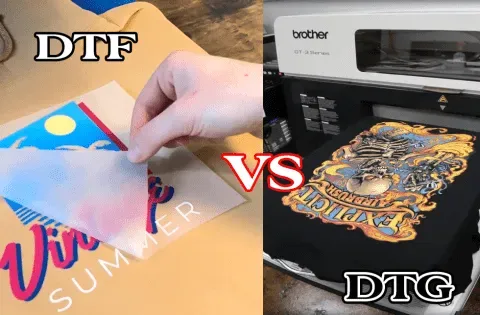
DTF vs DTG presents a compelling crossroads for apparel brands evaluating printing options, inviting a careful look at how each method aligns with product goals, production realities, and customer expectations. When you compare DTF printing advantages with DTG printing differences, you’ll notice distinct workflows, material flexibility across fabrics, surface feel, color range, and cost implications that matter as you scale from one-off runs to larger catalogs. This concise guide outlines how each method works in practice, highlights typical upfront and ongoing costs, and helps you map practical use cases so you can choose based on your catalog, margins, and fulfillment timelines. A key takeaway is that DTF can deliver reliable results across a broader fabric mix, while DTG often excels in cotton-heavy garments and ultra-clean gradients. By starting with clear goals and testing on your target textiles, you’ll position your operation to balance quality, efficiency, and value for customers.
From another angle, direct-to-film (DTF) versus direct-to-garment (DTG) workflows offer the same end goal—vibrant, durable graphics—but rely on different processes and materials. Think in terms of film-based transfer versus ink-on-textile, with the former enabling broader fabric compatibility and faster changeovers while the latter can emphasize ultra-soft hand feel on cotton-rich apparel. For many operations, the best path is a hybrid strategy, supported by the DTF vs DTG cost comparison to optimize margins across product lines and fabric blends.
DTF vs DTG: How the Core Printing Processes Shape Your Apparel Projects
Understanding DTF vs DTG begins with the core printing processes themselves. DTF (direct-to-film) relies on printing onto a PET transfer film, applying a powdered adhesive, curing, and then heat-pressing the design onto the fabric. DTG (direct-to-garment) uses inkjet technology to deposit water-based inks directly onto the garment, typically on cotton or cotton blends. These fundamental differences influence fabric compatibility, color behavior, and production workflows, shaping what kinds of projects are feasible for each method. This distinction is foundational to evaluating the “DTF printing advantages” and the “DTG printing differences” in real-world use.
As you compare the two paths, you’ll notice that the DTF workflow emphasizes transferability across fabrics and a more modular production line, while DTG emphasizes direct ink deposition with a soft hand feel and fine detail on absorbent fabrics. The practical impact is that DTF can handle blends and performance textiles with relative ease, while DTG often shines on cotton-rich garments where color fidelity and gradients can be achieved directly on the fabric. This difference informs decision-making around product mix, minimums, and the types of designs that work best for each method.
DTF printing advantages: Why Versatility Across Fabrics Improves Product Mix
DTF printing advantages include broad fabric compatibility, reliable color reproduction, and reduced setup constraints for varied catalogues. Because the transfer is film-based, you can print on a wide range of materials—from cotton and blends to polyesters—without being limited by substrate absorbency. This versatility supports diversified product lines and helps small businesses or brands test new fabrics with lower risk. It also tends to lower minimums for many orders, enabling more flexible on-demand or batch production scenarios.
Beyond fabric versatility, DTF printing advantages extend to stable color reproduction across different lots and improved scalability. Once the workflow is honed, you can reproduce consistent results across garments with varying textures or fiber contents, which is particularly valuable for mixed-fabric collections. When paired with robust curing and heat-press settings, DTF durability can be strong, contributing to resilient prints on a variety of fabrics and end-use conditions.
DTG differences and the importance of fabric absorbency on print fidelity
DTG differences center on how the ink interacts with the fabric. Direct-to-garment printing relies on the fabric’s absorbency to pull inks into the fibers, delivering crisp details on high-cotton substrates but requiring pretreatment and white underbase for darker fabrics. This reliance on substrate absorbency means DTG can deliver exceptionally soft hand-feel and subtle color gradients when conditions are ideal, but it can struggle on non-cotton materials or dark fabrics without the right preparation. This is where understanding DTG printing differences helps set expectations for color vibrancy and finish.
Another key DTG nuance is the balance between throughput and setup. While small-batch runs can be cost-effective, higher-volume DTG production may demand substantial pretreatment management, maintenance, and ink usage. For designers, the DTG best use cases typically involve cotton-dominant garments with high color fidelity requirements and designs that benefit from smooth gradients and photographic detail, whereas fabrics with low absorbency may necessitate compromises or alternative methods.
DTF durability: sealing, curing, and care for long-lasting prints
DTF durability hinges on the adhesive quality, film integrity, and correct curing. When the transfer is properly cured and bonded, DTF prints resist cracking, bleeding, and edge wear through multiple washes. The durability also depends on the heat press temperature, dwell time, and even pressure during transfer. Choosing a high-quality adhesive and ensuring consistent curing conditions are essential steps to maximize long-term performance.
Care and handling play a significant role in sustaining DTF durability. Following manufacturer-recommended curing temperatures and times, washing inside out, and using appropriate detergents can extend the life of the print. As with any garment decoration, establishing a standardized wash-test protocol on sample prints with target fabrics helps validate expected longevity across your product line and typical consumer use.
DTF vs DTG cost comparison: cost drivers for small runs and bulk production
DTF vs DTG cost comparison starts with upfront equipment considerations. DTG often involves higher initial investment in printers, pretreatment systems, and ongoing maintenance, while DTF generally requires less garment-side pretreatment and can leverage a more modular workflow. In many cases, the per-unit cost for mid-to-large runs tends to favor DTF due to streamlined preparation and flexible material handling. Yet, the exact economics depend on fabric type, design complexity, and production scale.
Other cost drivers include consumables, energy use, labor, and waste management. Pretreatment chemicals, ink consumption, and adhesive powders all contribute differently depending on which method you choose. For small orders with highly detailed color work, DTG may still be cost-effective if you can spread pretreatment and maintenance across many units. For larger catalogs with mixed fabrics, DTF’s flexibility and efficient batch workflows frequently translate to more favorable overall economics.
DTG best use cases and DTF best use cases: choosing the right method by product and volume
DTG best use cases shine in cotton-heavy apparel where color fidelity and soft hand feel are top priorities, especially for small runs and on-demand production. Direct-to-garment is ideal for designs with delicate gradients or photographic elements that benefit from the ink sitting within the fabric’s fibers. When speed-to-market on cotton-based tees is the aim, DTG often delivers the most straightforward workflow and finished feel.
DTF best use cases, on the other hand, extend across a broader fabric range and larger-volume opportunities. DTF is well-suited for mixed-fabric catalogs, performance textiles, and orders requiring faster setup or easier color consistency across lots. For brands managing diverse fabrics, multi-SKU lines, or on-demand platforms, DTF offers a scalable workflow with less dependence on substrate absorbency. In many operations, a hybrid approach—DTG for cotton-focused items and DTF for blends and non-cotton fabrics—delivers the best balance of quality, cost, and throughput.
Frequently Asked Questions
DTF printing advantages: How do they compare to DTG printing differences?
DTF printing advantages include versatility across fabrics, reliable color reproduction, and lower setup time for on-demand runs. DTG printing differences include strongest detail on cotton with a soft hand feel, but often require pretreatment and can incur higher per-unit costs on small runs. In practice, DTF is typically the better fit for mixed fabrics and scalable production, while DTG shines for cotton-heavy designs with high color fidelity when volumes justify pretreatment and equipment costs.
DTG printing differences: What should you know about fabric compatibility and color on DTG vs DTF?
DTG printing differences: DTG prints are direct to the garment using water-based inks, excelling on cotton-rich fabrics and delivering a soft hand feel but sometimes needing pretreatment for color vibrancy on dark fabrics. DTF handles a broader range of fabrics and maintains consistent color across lots, with a transfer film and powder adhesive that minimizes substrate constraints. Choose based on fabric mix, desired feel, and run size.
DTF vs DTG cost comparison: Which method offers lower costs for small runs vs large batches?
DTF vs DTG cost comparison: Upfront equipment and ongoing maintenance for DTG can be higher, especially for small-volume runs due to pretreatment and throughput limits. DTF often yields lower per-unit costs for mid-to-large batches because it reduces garment-side pretreatment and uses a modular workflow. The actual math depends on fabric, ink/adhesive costs, energy, and labor, so run a simple TCO analysis for your typical order profile.
DTF durability: How durable are DTF prints compared with DTG, and what care is required?
DTF durability: When properly cured, DTF prints resist cracking and fading through normal washing cycles. Durability hinges on adhesive quality, film and powder integrity, and curing temperature and time. To maximize longevity, follow manufacturer guidelines and use quality heat press equipment with even pressure.
DTG best use cases: When is DTG the better choice, and when does DTF offer advantages?
DTG best use cases: DTG excels on cotton-heavy apparel with high color fidelity, making it ideal for small runs, on-demand orders, and designs with subtle gradients or photographs. It delivers a soft hand feel on cotton fabrics but may require pretreatment and white underbase on dark garments. DTF remains strong for mixed fabrics and bulk production, so many shops use a hybrid approach to cover broader product lines.
DTG printing differences on dark fabrics: How do dark fabrics affect color vibrancy and the need for pretreatment?
DTG printing differences on dark fabrics: Dark garments often require a white underbase and pretreatment to achieve bright, accurate colors, which adds cost and timing. DTF can produce vibrant results on dark fabrics with less underbase dependence, thanks to the transfer film, but still needs proper curing for durability. Weigh these factors against your fabric portfolio and production priorities when choosing between methods.
| Aspect | DTF | DTG |
|---|---|---|
| What it is | Direct-to-film transfer: prints on PET film; heat-press with powder adhesive. | Direct-to-garment printing: inks sprayed directly onto fabric via textile inkjet on cotton/cotton blends. |
| How image is created | Image printed on film, bonded via adhesive powder; transfer to fabric with heat. | Ink deposited directly onto fabric. |
| Fabric compatibility | Broad range including blends and performance textiles. | Cotton and blends; dark fabrics require pretreatment/white underbase. |
| Color and detail | Strong color; good edge detail; reliable across lots. | Excellent detail on high-cotton; color vibrancy can vary on dark fabrics without pretreatment. |
| Print feel | Usually firmer due to adhesive layer; can be smooth with proper curing. | Typically soft hand feel as ink sits on fabric. |
| Durability | Durable when cured; care matters; resistant to cracking with proper curing. | Durable with good pretreatment and curing; sensitive to fabric and wash cycles if not properly cured. |
| Setup & costs | Lower per-unit cost on mid-to-large batches; fewer garment-side pretreatments; hardware cost varies. | Higher upfront equipment costs; pretreatment, ink, and maintenance; small runs can be costly. |
| Best use cases | Bulk/mixed fabrics; on-demand with diverse fabrics; fast setup for catalogs. | Cotton-heavy, high color fidelity, small runs or on-demand with soft hand feel. |
| Maintenance | Modular, scalable; requires curing and film handling. | Space and upkeep for pretreatment, ink handling, and curing. |
| Environmental considerations | Film and powder waste; energy; manage waste; eco-friendly options. | Pretreatment and water usage; inks; energy; waste management of materials. |
| Decision guidance | Versatile for varied fabrics; scalable for production. | Best for cotton-focused lines needing soft hand feel and high fidelity; consider hybrid approaches. |
Summary
Conclusion: Selecting between DTF and DTG hinges on your product mix, volumes, and fabric strategy. Both methods offer distinct advantages: DTF provides versatile fabric compatibility and scalable on-demand production across a broad range of materials, while DTG delivers exceptional detail and a soft hand feel on cotton-heavy garments. Durability, cost, and sustainability should factor into your decision, and many businesses find value in a hybrid approach that uses DTG for cotton-focused items and DTF for diverse fabrics and large-volume runs.